The Roots of Kenya’s Eco-Tourism Story
Kenya’s path to becoming Africa’s leading eco-tourism destination did not begin with marketing campaigns, glossy brochures, or airline partnerships. It began with soil, savannah, and a set of conservation laws enacted long before the term “eco-tourism” entered the global vocabulary. Kenya tourism today rests on a foundation built over more than a century of deliberate choices to protect wildlife, share revenue with rural communities, and treat wild places as national assets rather than private holdings.
The country’s conservation history starts in 1895 with the establishment of a small game reserve in what is now Nairobi National Park, followed by a string of protected areas administered first by colonial authorities and then, after 1963, by independent Kenyan institutions. The Wildlife (Conservation and Management) Act of 1976 gave the country one of the strongest wildlife-protection frameworks on the continent, and the founding of Kenya Wildlife Service in 1989, the burning of confiscated ivory stockpiles the same year, and support for the global ivory trade ban cemented a national identity around wildlife conservation that continues to define safari Kenya experiences today.
What distinguishes Kenya from many neighbours is that conservation was never framed as a purely aesthetic or aristocratic pursuit. From the start, parks were positioned as economic engines for the new nation. Tourism revenues were meant to fund rural development, education, and infrastructure. That early decision to link wildlife protection with livelihoods is the original seed of the eco-tourism model Kenya is now celebrated for, and it is the reason conservation has survived successive political shifts when similar models elsewhere have collapsed.
The institutional weight behind this history continues to shape how the country is marketed and perceived abroad. International research institutions, film crews, and conservation NGOs still base flagship programmes in Kenya precisely because the legal and logistical infrastructure already exists. Visitors who book a safari Kenya holiday are joining a supply chain that has been refined for decades, from professional driver-guide training colleges to a network of lodge standards that competes with anything in southern Africa.
Community Conservancies and Maasai Cultural Tourism
How the Conservancy Model Works
For most of the twentieth century, the dominant conservation model across East Africa was fortress-style: land set aside for wildlife and fenced off from the people who had lived alongside it for centuries. Kenya gradually moved away from that approach, and the shift is one of the clearest reasons the country is held up as a continental benchmark.
Community conservancies are parcels of communal land that landowners set aside for wildlife and tourism, usually in partnership with a private or community-run safari operator. The operator pays a nightly bed fee or lease, the community reinvests a share in schools, water projects, and predator-proof bomas, and wildlife is treated as a shared resource rather than a threat. Northern Rangelands Trust alone supports dozens of such conservancies across millions of acres in northern and central Kenya. The broader conservancy model, anchored in Laikipia, the Greater Mara, and Samburu, has become a template replicated in Namibia, Tanzania, and Botswana.
Specific examples illustrate the scale of the shift. Lewa Wildlife Conservancy pioneered the northern-rangeland conservancy model and now hosts a substantial share of Kenya’s black rhino population alongside successful Grevy’s zebra monitoring. Borana Conservancy has stitched together former cattle ranches into a contiguous wildlife block bordering Lewa. In the Mara ecosystem, conservancies such as Mara Naboisho and Mara North have effectively doubled the wildlife-viewing area available to visitors while reducing pressure on the national reserve itself.
What Maasai Cultural Tourism Actually Looks Like
Maasai cultural tourism is the most visible expression of this shift. Visitors no longer simply drive past Maasai homesteads on the way to a game drive; they stay in manyattas, learn spear-making, beadwork, and traditional fire-starting, and listen to elders explain the deep ecological knowledge encoded in Maasai land use. Operators linked to the Mara conservancies channel a direct percentage of nightly rates back to community trusts, giving the host community the role of shareholder rather than subject.
The model is not without friction. Critics point out that conservancy income can be unevenly distributed, that gender representation on community boards is often weak, and that predator encounters still cause livestock losses that compensation schemes do not fully cover. Honest writing acknowledges those tensions rather than papering over them. Even so, conservancies have measurably reduced poaching, increased wildlife numbers outside core parks, and given rural households a tangible stake in keeping landscapes wild.
Signature Safari Kenya Experiences and Wildlife Tours
Matching Reserve to Experience
Safari Kenya remains the heart of the country’s tourism offer, and Kenya wildlife tours span ecosystems as varied as any on the continent. Each major reserve delivers a distinct experience, and combining two or three in a single itinerary is standard practice for serious visitors.
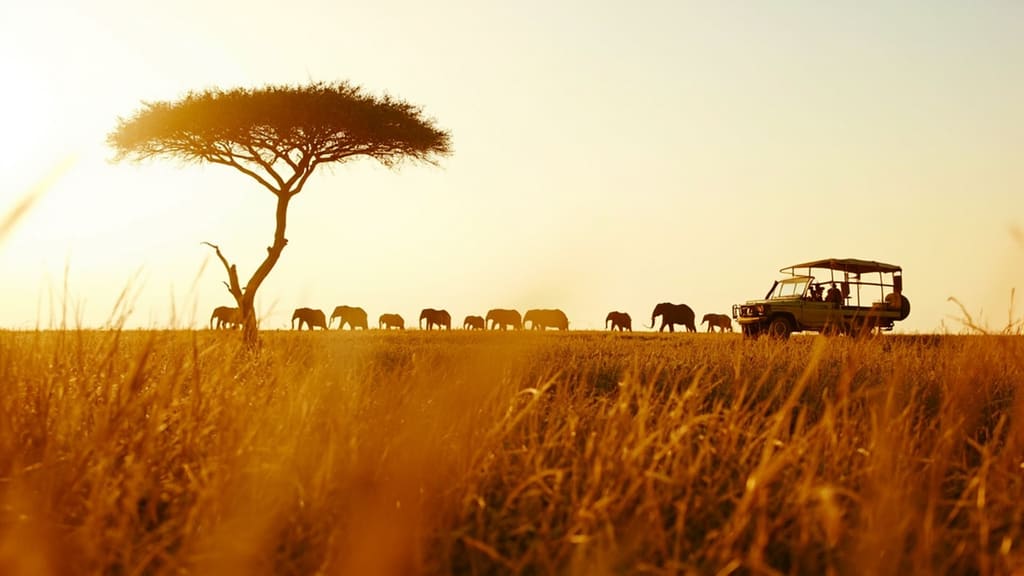
The Maasai Mara National Reserve and its surrounding conservancies host the Great Migration between roughly July and October, when more than a million wildebeest cross from the Serengeti. Game viewing density here is exceptional year-round, and the cats — lion, leopard, cheetah — are among the most reliably sighted in Africa. Amboseli National Park places elephants against the backdrop of Mount Kilimanjaro, while Samburu and Buffalo Springs Reserves in the north showcase arid-country specials: Grevy’s zebra, reticulated giraffe, Beisa oryx, and the cultural crossroads of Samburu, Turkana, and Borana communities. Lake Nakuru and Lake Naivasha anchor the Rift Valley soda-lake circuit, famous for flamingo populations, rhino tracking, and day-trip accessibility from Nairobi. Tsavo East and Tsavo West together form one of the largest protected areas in the world, with red-earth elephants, maneless lions, and the Lugard Falls rapids. Ol Pejeta Conservancy, home to the last northern white rhinos, blends intensive conservation with high-end visitor experiences.
| Reserve / Ecosystem | Signature Draw | Best Suited To |
|---|---|---|
| Maasai Mara & conservancies | Great Migration, big cats | First-time safari Kenya visitors |
| Amboseli | Elephants with Kilimanjaro backdrop | Photographers |
| Samburu / Buffalo Springs | Arid-country endemics, cultural mix | Repeat safari travellers |
| Laikipia conservancies | Black rhino, walking, horseback | Active, off-grid seekers |
| Lake Nakuru / Naivasha | Flamingos, rhino, Rift Valley scenery | Short-stay and family trips |
| Tsavo East / West | Red elephants, vast scale, Lugard Falls | Combine with coast |
What elevates these reserves from simple game-viewing destinations is the layering of activities: night drives in conservancies, guided bush walks with Maasai or Samburu warriors, horseback safaris in Laikipia, and fly-camping under canvas on the Mara plains. A well-built safari Kenya itinerary balances vehicle time, walking time, and rest, and the best operators design days around the rhythms of the animals rather than the photographer’s checklist.
Off the beaten path, Kenya offers experiences that reward travellers willing to trade density for solitude. Walking safaris in the Mathews Range pair big-game tracking with multi-day fly-camping. Camel trekking with Samburu or Turkana communities crosses landscapes unchanged for centuries. Mountain climbing on Mount Kenya’s rugged peaks — Batian, Nelion, and the more accessible Point Lenana — adds a serious alpine component to Kenya wildlife tours that few visitors expect. Even Lake Turkana, the world’s largest desert lake, is now accessible through community tourism initiatives that blend archaeology, paleontology, and cultural exchange with remote pastoralist communities.
Nairobi, the Coast, and the Diversity Beyond the Safari
Nairobi as Destination, Not Just Transit
A common misconception is that Kenya tourism begins and ends with a safari vehicle. In reality, the country’s appeal is unusually broad, and Kenya vacation packages increasingly combine wildlife, urban, and coastal segments in a single trip.
Nairobi tourist attractions are strong enough to justify at least two days in the capital. Nairobi National Park, where rhinos graze with the skyline behind them, is one of the most photographed wildlife settings on earth. The David Sheldrick Wildlife Trust rehabilitates orphaned elephants and allows visitors to watch the daily mud-bath feeding. The Giraffe Centre in Karen runs a successful breeding programme for the endangered Rothschild’s giraffe, and the National Museum documents everything from early hominid fossils to contemporary Swahili material culture. Bomas of Kenya offers a curated introduction to the country’s ethnic communities through music, dance, and traditional homestead architecture.
The capital’s compactness makes these experiences easy to combine in a single weekend. Most Nairobi tourist attractions cluster within an hour of the city centre, and shuttle services link the airport to most hotels in well under an hour. Evening visits to the Karen food courts and the curated curio markets at Kazuri Beads offer gentle counterpoints to the day’s wildlife encounters, and most outfitters will build a two-night city package into longer itineraries at no extra logistical cost.
The Swahili Coast and Mombasa Beach Holidays
The coast adds a second layer entirely. Mombasa beach holidays blend Indian Ocean swimming with centuries of Swahili-Arab trade history. Old Town’s carved doors, Fort Jesus, the dhow harbour, and the spice markets remain largely intact despite rapid coastal development. North of Mombasa, Nyali, Bamburi, and Shanzu offer resort-style accommodation with easy access to marine parks; south, Diani Beach is consistently ranked among Africa’s finest stretches of sand, with kite-surfing, snorkelling at Kisite-Mpunguti Marine Park, and the colobus monkey forests of Shimba Hills within reach. Lamu Island, accessible only by boat or small aircraft, preserves a Swahili townscape unchanged for generations and is inscribed as a UNESCO World Heritage Site.
Kenya’s geographic spread means visitors can move from a snow-capped equatorial peak to a coral-fringed tropical beach in a single day, a logistical advantage few African countries can match. Domestic airlines and a growing network of light-aircraft airstrips inside conservancies make multi-stop itineraries practical rather than punishing, and most safari Kenya outfitters will happily piece together a coast-and-bush combination.
Planning a Responsible Kenya Trip
Timing, Operators, and Budgets
Thoughtful planning turns a good safari into a great one, and a responsible Kenya trip rewards travellers who do their homework. Timing matters: the dry seasons — January to March and July to October — concentrate wildlife around remaining water sources and offer the clearest game viewing. The Great Migration river crossings peak between late July and September. Coastal and lake regions remain pleasant year-round, while highland trekking around Mount Kenya is best in the dry months.
Choosing the right operator matters more than choosing the right park. Look for companies that are members of recognised bodies such as the Kenya Association of Tour Operators (KATO), that publish clear conservation and community commitments, and that pay conservancy fees in full. Independent reviews, peer recommendations, and direct conversations with outfitters will reveal more than any brochure. The Kenya Tourism Board maintains a directory of licensed operators and provides updated information on park fees, road conditions, and regional advisories.
Budgets vary widely. A budget camping safari experience with shared vehicles can be cost-effective, while a luxury fly-in safari including private conservancy access, hot-air ballooning, and exclusive guides commands a premium. Mid-range Kenya vacation packages typically balance vehicle-based safaris with one or two nights of community-based or coastal stays. Many packages combine two or three regions over eight to twelve nights, which is a sensible minimum to avoid constant transit. Combining regions is now the norm rather than the exception: a two-week itinerary might pair three nights on the Mara with two nights in Laikipia, a night on the coast at Diani or Watamu, and a final two nights in Nairobi to decompress before flying out.
Health, Packing, and Cultural Etiquette
Health preparation is straightforward. A yellow fever certificate is required for entry from endemic countries and is recommended regardless. Malaria prophylaxis is advised for most regions below 2,500 metres. Travellers should pack neutral-coloured clothing for game drives, layered warm clothing for highland mornings, a good pair of binoculars, and a camera with a telephoto lens. Reusable water bottles, reef-safe sunscreen, and a refusal of single-use plastics on safari are small contributions that match the broader ethos of the trip.
Cultural sensitivity deserves the same attention as logistics. In Maasai communities, photographing people or homesteads requires explicit permission and often a small fee that goes directly to the household. Modest dress applies in coastal Muslim areas, particularly Lamu Old Town. Tipping practices are well established: driver-guides, lodge staff, and conservancy scouts all rely on gratuities to supplement modest base wages. For readers planning in detail, a broader Kenya travel guide is available on Wikipedia, and the Kenya Tourism Board site offers current entry requirements, accredited operators, and seasonal event calendars that complement any itinerary. With those resources in hand, a Kenya trip becomes less about ticking boxes and more about joining a country whose economic future, cultural identity, and wild places are visibly linked.