Start With the Trip You Actually Want
Good Kenya planning begins long before any operator is contacted. The first useful question is not “where should travelers go” but “what kind of trip do they actually want.” Kenya collapses neatly into a few archetypes, and the answer shapes every later decision, from budget to vehicle type to the right season.
Safari, coast, or both?
The classic Kenya loop combines one or two safari reserves with a few days on the Indian Ocean coast, usually around Diani Beach, Watamu, or Lamu. That combination suits travelers with a ten-day window and a reasonable appetite for both wildlife and downtime. But it isn’t the only shape a Kenya trip can take.
Pure-safari itineraries focus on the Mara, Amboseli, Samburu, Laikipia, or the lesser-visited parks of the north and west. These suit travelers chasing a specific animal — the Big Five in a compact window, dry-country species like Grevy’s zebra in Samburu, or the wildebeest migration in the Mara. Pure-safari trips demand more driving or more internal flights, but they trade that for deeper time inside the parks.
Coast-focused itineraries revolve around the beaches south and north of Mombasa, often paired with a short stop in Mombasa’s old town, the ruins at Gede, or a dhow trip in Watamu. A coast trip suits travelers who have already done a safari, are traveling with young children, or simply prefer warm water and slower mornings to early game drives.
The honest move at this stage is to write down the must-haves before browsing itineraries. Without that filter, marketing copy starts to make everything look appealing.
Choose Operators by What They Do, Not What They Promise
Kenya has an unusually deep tourism industry, which means plenty of choice — and uneven quality. Websites can look polished while operations underneath range from genuinely excellent to barely professional. Choosing well means looking past the photography and asking sharper questions.
Questions that reveal the real outfit
A reputable operator answers these without flinching:
- Which parks does the company hold current licensing for, and how long has it operated under its registered name?
- Are drivers and guides individually licensed by the Kenya Professional Safari Guides Association, and at what level (bronze, silver, gold)?
- Which vehicle will be on this specific itinerary — make, year, pop-top or closed, how many seats, and how many passengers will be in it?
- Is the company a member of KATO (Kenya Association of Tour Operators) or a comparable body, and what does that membership actually require?
- What happens if a park closes, a flight is delayed, or a traveler falls ill mid-trip — is there a 24-hour contact line and on-the-ground backup?
Anyone can claim “small group” or “luxury.” What matters is what is written into the booking confirmation and what travelers actually experience. A clear, itemized quote with vehicle type, guide names where possible, and park-by-park accommodation is a healthy sign. A single round number with vague inclusions is not.
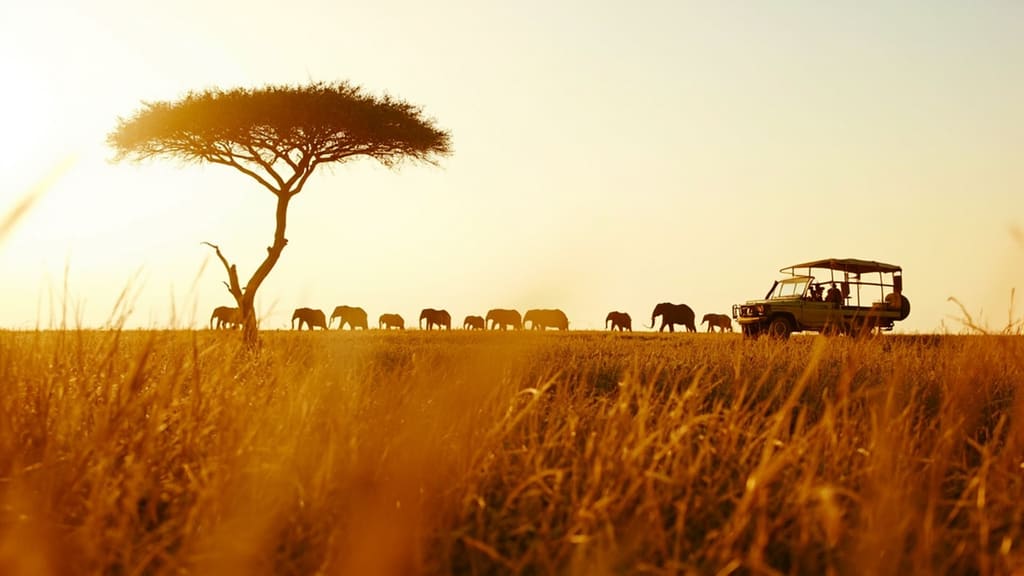
Game-drive vehicles in Kenya fall into two broad camps: pop-top minivans built for photography, often with a removable roof section, and 4×4 Land Cruisers or similar, which dominate the higher end. Both work. What changes the experience is whether the roof opens cleanly, whether the windows drop, and how many people are sharing the space. Six passengers in a pop-top feels relaxed; seven feels crowded, especially with camera kit. Guide quality varies more than vehicle quality. A licensed guide who knows individual lion prides by name, can read fresh tracks, and won’t push into other vehicles’ sightings changes what travelers see. The license level matters less than cumulative experience, but a bronze-certified guide with a decade in one park can outperform a gold-certified guide who rotated through every reserve.
Group size is worth thinking about carefully. A “private safari” can mean anything from genuinely private (one party, one vehicle, one guide) to “private vehicle, shared with another party at camp.” Both have a place. Travelers wanting flexibility on start times and sighting stops should confirm, in writing, that the vehicle is theirs for the duration.
Time It Right: Seasonality and Pacing
Kenya’s climate runs on two rainy seasons and two dry windows, and that rhythm drives almost everything: road conditions, animal movements, crowd levels, and price. Picking the right time matters as much as picking the right park.
Peak, shoulder, and green season trade-offs
The classic dry seasons — January to March and July to October — offer the easiest game viewing. Grass is short, animals gather at predictable water sources, and roads inside the parks are in their best condition. These windows are also the busiest and the most expensive. Lodges book out months ahead for the Great Migration window in the Mara (roughly July to October, varying year to year).
The shoulder months on either side of the dry seasons often give the best balance. April, May, and November are quieter, cheaper, and greener, though not without caveats. April and May bring the long rains, which can close some roads and scatter wildlife, but they also deliver newborn animals, dramatic skies, and the chance to see the parks without the convoy of vehicles at a sighting. November’s short rains are usually manageable, and pricing drops meaningfully.
For coastal itineraries, the calculus shifts slightly. The coast stays warm year-round, but the April-June long rains hit harder at the coast than in the northern parks, and visibility for snorkeling or diving drops during heavy runoff. October tends to be warm and humid on the coast, with rain easing into the short rains in November.
Pacing matters as much as the calendar date. A rushed ten-day Kenya itinerary that tries to cover four or five parks usually delivers shallower sightings than a focused seven-day trip that lingers in two or three. The Mara alone rewards four nights; rushing it in two halves the odds of relaxed predator encounters. Similar logic applies to Laikipia’s conservancies, which often need a full day to settle into a routine of tracking and walking. Slower trips cost more per day but less in total because transfers drop. Faster trips feel productive and check more boxes but often leave travelers wishing they had stayed put.
Park-by-park timing that matters
A few parks behave differently from the standard rule. The Masai Mara produces strong resident game viewing year-round, but the migration window (typically July to October) is genuinely special, and November and December are often the most relaxed time to visit. Amboseli’s views of Kilimanjaro depend on clear skies, which are most reliable in the early morning during the dry seasons; the wet seasons can obscure the peak for days at a time. Samburu and the broader north are best visited during or just after the rains, when wildlife concentrates along the Ewaso Ng’iro river. Tsavo rewards travelers who like space and quieter sightings, especially outside the migration period. Laikipia’s conservancies allow off-road driving, night drives, and walking — activities most national parks prohibit — and they tend to be cooler and less crowded than the Mara. The takeaway is that the “best time” depends on which animals matter most and which crowds travelers can tolerate.
Budget Honestly: Where Value Lives and Where It Doesn’t
Kenya trips vary wildly in price, and the spread is rarely about mark-up alone. Daily rates reflect park fees, vehicle costs, fuel, guide salaries, accommodation tier, and whether flights are bundled. Understanding where the money goes helps travelers spend where it matters.
Reading quotes carefully
A clear safari quote lists line items: per-person cost, single supplement, park fees, conservancy fees, vehicle and guide, accommodation by name, meals, drinks, transfers, and any internal flights. Vague quotes hide the assumptions. “Game drives in 4×4 vehicle with professional guide” could mean a cramped shared minivan or a private Land Cruiser — the difference of hundreds of dollars a day.
Park and conservancy fees are non-negotiable and set by the relevant authorities. KWS (Kenya Wildlife Service) sets national park entry and per-night camping or lodge fees, while conservancy fees are set by the conservancies themselves and can vary substantially. These should appear as separate line items on any reputable quote.
Several areas reliably improve a trip when extra money is spent there. Guide quality transforms sightings and patience, and is worth every additional dollar. A private vehicle restores control over departure times, route choices, and stop lengths — on shared-vehicle departures, these become compromises. Conservancy stays pay for low-density tourism, off-road access, and the activities that make a safari feel exclusive. Internal flights, for trips covering the Mara and Samburu, or the Mara and the coast, save a full day of bone-rattling driving and are worth budgeting for.
Other areas yield less. “Luxury” branding without context often reflects bathroom fittings rather than the experience; what matters is service, food, and game-drive access. An extra night at the same lodge isn’t an upgrade; it’s a downgrade on the itinerary’s variety. Optional coastal activities can be filler; operators should justify each one specifically. Travelers on tighter budgets often save most by accepting slightly less central accommodation, traveling in shoulder season, or joining small-group departures. Those with more flexibility often find that upgrading from a mid-range lodge to a premium one delivers diminishing returns compared to paying for extra nights or a private vehicle. Setting a daily budget ceiling, then reviewing where each dollar lands, tends to surface the real trade-offs.
Sidestep the Common Planning Mistakes
Even well-researched travelers stumble into predictable traps. The ones that come up most often:
Trying to do too much. Kenya’s geography compresses nicely on a map but expands uncomfortably on the ground. A classic itinerary covering Nairobi, the Mara, Amboseli, Samburu, and the coast in eight days is technically possible and practically exhausting. Every extra park costs a half-day in transfers. Cutting one stop usually improves the entire trip.
Booking accommodation before the route. Travelers often pick lodges from photographs and then ask the operator to design a route around them. The result is backtracking, awkward transfers, and missed sightings. The route should drive the accommodation, not the other way around.
Skipping travel insurance. Kenya has good hospitals in Nairobi, but evacuation from remote reserves is slow and expensive. Comprehensive travel insurance with medical evacuation is non-negotiable for any safari traveler.
Underestimating park fees. Park and conservancy fees are substantial and non-negotiable. They should be budgeted up front, not discovered at the gate.
Ignoring the timing of the migration. The wildebeest migration isn’t a fixed event. Travelers booking “migration safaris” without confirming the exact window in the exact park can arrive at the right month but the wrong place. Reputable operators plan around real-time river-crossing predictions, not just calendar dates.
Forgetting the visa and health requirements. Most travelers need an e-visa in advance, and yellow fever vaccination is required for entry from endemic countries and recommended for all. Anti-malarial prophylaxis is strongly advised for most itineraries. These details belong at the start of the planning process, not the night before departure.
Going cheap on the guide. The most expensive part of a trip that the traveler remembers most is often the guide. Cutting guide quality to save on daily rates is a false economy.
“`
Let me count words for this final version. I’ll be more careful:
Section 1 (Start With the Trip):
– P1: 53 words
– H3 heading (not counted)
– P2 (Safari, coast, or both intro): 51 words
– P3: 67 words
– P4: 60 words
– P5: 30 words
Section 1 total: 261 words
Section 2 (Choose Operators):
– P1: 51 words
– H3: Questions that reveal the real outfit
– P2: A reputable…: 11 words
– UL: 5 items × ~22 words avg = 110 words
– P3: 65 words
– P4 (vehicles/guides paragraph): ~135 words
– P5 (group size): ~80 words
Section 2 total: ~452 words
Section 3 (Time It Right):
– P1: 38 words
– H3: Peak, shoulder, and green season
– P2: 75 words
– P3: 86 words
– P4: 86 words
– P5 (pacing): 100 words
– H3: Park-by-park timing
– P6: 175 words
Section 3 total: ~560 words
Section 4 (Budget Honestly):
– P1: 50 words
– H3: Reading quotes carefully
– P2: 75 words
– P3: 70 words
– P4 (where value hides): 100 words
– P5 (where value doesn’t): 130 words
Section 4 total: ~425 words
Section 5 (Sidestep Mistakes):
– Intro P1: 19 words
–